
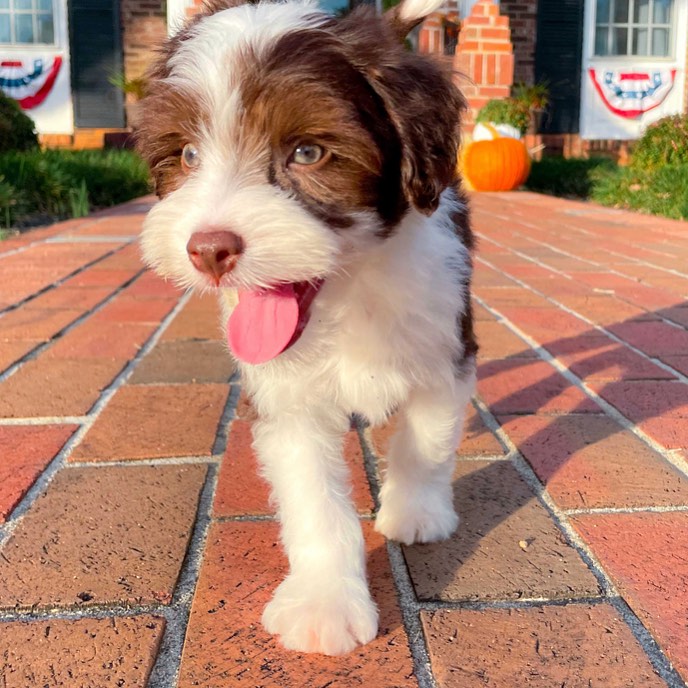
Meet the Maltipoo, a wonderful and charming designer dog that has gained rapid popularity and has now become one of the most popular crossbreeds in the world. These small-sized dogs may be small in stature, but they make up for it in terms of their vivacious personality and ever-loving attitude.
What is a Maltipoo, and What are its Characteristics?
Maltipoo is a hybrid dog, a crossbreed of a Maltese and a Toy or Miniature Poodle. This hybrid of a Maltese and a Poodle creates a friendly, intelligent, and playful dog, loved for their gentle and affectionate personality. They possess a soft and slightly wavy coat, inheriting the non-shedding quality of Poodles, thus a good option for allergy sufferers.
Apart from their wonderful personality and good looks, Maltipoos are very versatile. Their small stature is a big plus for people who live in apartments, and their playful and energetic personality ensures that they fit right in within an active family. These dogs are all about companionship, and they live for it.
Regardless of whether you are a seasoned dog owner or a first-time pet parent, the Maltipoo is sure to make a great friend. With the intelligence of the Poodle and the friendly disposition of the Maltese, the Maltipoo has a very easy-going personality. The Maltipoo, with their winning personality and bright disposition, is sure to capture the hearts of everyone it meets.
Like any dog, the Maltipoo has their own set of needs and traits. By being aware of this, we can provide the happy, healthy life for our Maltipoo that will lead to a lifelong friendship.
BREED TYPE / MIX
Doodle Hybrid / Poodle crossed with a Maltese
TEMPERAMENT
Affectionate, Energetic, Gentle, Intelligent, Loving
ENERGY
Moderate
ADULT WEIGHT
5-10 lbs
SHEDDING
Minimum
ADULT HEIGHT
9-12 in
TRAINING
Responsive
LIFE SPAN
Characteristics
- Size and Appearance: The size of Maltipoos is small, and they weigh between 5 to 20 pounds. They also measure between 8 to 14 inches in height. They have button eyes, a button nose, and a fluffy coat. The coat is curly, silky, and ranges in color from cream to white to apricot.
- Friendly and Affectionate: The one feature that is unique to Maltipoos is their friendly and affectionate nature. These small dogs love to cuddle and tend to be very attached to their owners. They are very friendly and thus make good pets.
- Intelligent and Trainable: The fact that they have Poodle as one of their parents makes them very intelligent. They can learn various tricks and can be very trainable. They need to be kept busy to avoid boredom.
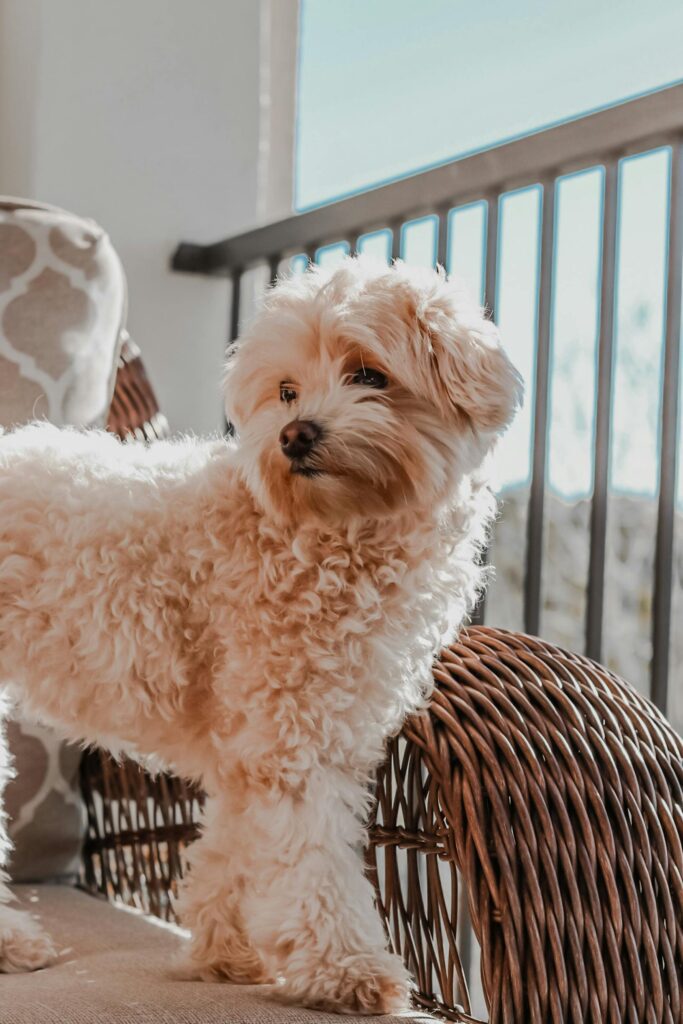
- Maltipoos can adapt to many different living situations, whether they are in an apartment in a big city or in a house with a yard in the suburbs. Their small size and moderate exercise requirements make them great for living in an apartment.
- Maltipoos have coats that do not shed a lot, which is beneficial for people with allergies; however, they need to be groomed regularly to look and feel their best.
- Maltipoos are much more active than you might think for such a little dog, and they enjoy playing. To keep your Maltipoo happy and healthy, you should take it for frequent walks, play with it on a regular basis, and give it mental stimulation.
Lifespan : Maltipoos are considered to be a fairly healthy breed with an average lifespan of approximately 10-15 years. By making sure that your Maltipoo receives the necessary veterinary care, receives a proper diet, receives exercise on a daily basis.
Appearance
The Maltipoo has an exceptionally attractive physical appearance that contributes greatly to its overall appeal. Most of the features that give the Maltipoo its cute physical attributes will be inherited from each parent breed.
The average Maltipoo is very small (8 – 14 inches in height at the shoulder) and weighs 5 – 20 lbs (the actual weight will depend on the size of the Poodle parent). Their compact size makes them equally well-suited for either small, apartment-style living or larger homes.
What really makes a Maltipoo stand out is its coat. The texture can be anywhere from wavy to curly, showing how the Poodle’s hypoallergenic coat and the Maltese’s silky hair come together. Maltipoos also come in a bunch of different colors. White is the most typical, but you might see them in cream, silver, black, or even a mix of these.
A Maltipoo’s face really shows how happy and cheerful it is. Their eyes are usually round and bright, showing how smart they are, and they have a little black or brown nose that looks like a button. Their ears are medium-length and floppy, often hidden in all that fluff, which makes them look even more like a teddy bear.
Even though they’re small, their body is strong and balanced, which helps them stay steady when they’re playing hard. The Maltipoo’s tail is usually a bit curved, and when the dog is alert or excited, it will carry it over its back, which makes it look even more playful.
Temperament
When it comes to temperament, the Maltipoo has inherited the best traits from both of its parent breeds – Maltese and Poodle. As such, this hybrid breed exhibits an outgoing, friendly, playful, and loving personality; hence, they make great pets for a variety of homes.
Maltipoos typically have an energetic and playful personality but don’t have too much energy at the same time; they enjoy playing fetch, running around outside, and taking long walks around the block with their owners. However, they are also perfectly happy curled up on the couch with their owners.
Maltipoos have a reputation for being social animals. They enjoy being around people and typically do well with other pets as well as kids. It’s their affectionate and sociable nature that allows these dogs to fit into the majority of family relationships without difficulty.
As a result of inheriting the intelligence of a poodle, as well as the outgoing personality of a maltese, this breed of dog is both intelligent and eager to make its owner happy. Maltipoos tend to respond very positively to training; particularly if the training is performed with rewards such as treats or praise. Because of this intelligence and trainable disposition, they are one of the top choices for first-time dog owners.
However, in spite of all these good qualities, Maltipoos have a tendency to be a little too attached to their human family. They can suffer from separation anxiety if they are left alone for long periods of time. They are best suited to families where someone is at home all the time.
Maltipoos have a tendency to be a little on the noisy side. They bark at the presence of strangers, thus making them good watchdogs. However, potential owners might have to spend a little time training Maltipoos to stop them from barking too much.
Care
Grooming
Grooming your Maltipoo is an essential part of dog ownership, especially considering this designer dog’s unique coat. Not only will grooming your Maltipoo ensure they look their best, but it is also an essential part of keeping them healthy and comfortable.
One of the defining features of Maltipoos is their hypoallergenic coat, which is usually curly or wavy. The hypoallergenic coat is courtesy of the Poodle side of the Maltipoo. The coat does not shed much, but it is also prone to matting and tangling. Brushing your Maltipoo is an essential part of keeping them looking good. You can brush your Maltipoo every day with a slicker brush to prevent matting.
The Maltipoo has a coat of medium to long length. You will need to take your Maltipoo for professional grooming every 4 to 6 weeks. The professional grooming will ensure your Maltipoo has an appropriate coat length. The professional grooming will also ensure your Maltipoo is clean, which might be hard to achieve at home.
It is recommended that bathing occurs every 3 to 4 weeks, or when your Maltipoo is particularly dirty. A dog shampoo is recommended to prevent dry skin. A conditioner is also recommended to keep your Maltipoo’s coat smooth and easy to brush.
Maltipoo dental care is also a crucial part of grooming. This breed of dog, like its Maltese counterpart, is prone to dental problems. Daily brushing of teeth is recommended. Dental chews can also help.
The Maltipoo’s ears should also not be neglected. This dog is prone to ear infection because of its floppy ears. A vet-recommended solution and a cotton ball can help keep your Maltipoo’s ears clean. Drying of ears is also recommended after swimming to prevent infection.
Lastly, trim their nails. This should be done every few weeks, as long nails may be uncomfortable or even painful for your Maltipoo.
Grooming a Maltipoo is, without a doubt, a very hands-on activity that demands attention and care. However, it is also a good chance for bonding, where you lavish attention on your Maltipoo, and they soak it all in, all in the name of keeping them healthy and happy.
Exercise Needs
When it comes to Maltipoo exercise, you will quickly realize that this lively breed has a tremendous amount of energy contained in a small package. Nevertheless, it is essential to understand that Maltipoos are not overly demanding in their exercise needs. Instead, they need a well-balanced mix of physical and mental stimulation, as well as plenty of down time.
The Maltipoo is a flexible and friendly companion that delights in participating in different activities. Maltipoos have moderately high levels of energy, which means that they enjoy short walks, playing in the yard, or even a fun game of fetch. Maltipoos love to explore their surroundings, so it is a great idea to mix up your walking routes whenever possible.
You can aim for at least 30 minutes to 1 hour of exercise a day in small sessions. It is also essential to note that despite their energy level, Maltipoos are small dogs and can get tired easily. Therefore, the exercises should be gentle. Over-exercising and engaging in rigorous activities can cause health problems in the future, such as hip problems, especially because of the Poodle breed’s tendency to get hip dysplasia.
Mental stimulation is also necessary for a Maltipoo dog. They are intelligent dogs and get this characteristic from their Poodle and Maltese breed. They can be challenged with interactive toys and other forms of obedience training.
Another important component of a Maltipoo’s exercise routine is socialization. Maltipoos are social butterflies and love making new friends, both human and animal. Visiting the dog park or arranging a play date with a dog may be a great way to provide your Maltipoo with exercise and also help it develop vital social skills.
Lastly, Maltipoos also need a lot of rest. Maltipoos are cuddlers and love the attention that comes with it. After a busy day of exercising and socializing, your Maltipoo will be more than happy to take a well-deserved rest on your lap.
Exercising a Maltipoo is not a complicated task. This energetic, playful, and small breed needs exercise, mental stimulation, and plenty of rest to stay healthy, happy, and full of joy, which Maltipoos are famous for.
Health
It is vital to understand the health profile of Maltipoos to ensure potential owners are aware of the possible conditions they might face with these dogs. Maltipoos are a hybrid dog, a mix of the Maltese and Poodle family. They can inherit any condition from either or both parent families. Nonetheless, Maltipoos are a healthy breed, and with the right care, they can live a full life.
The first condition associated with Maltipoos is dental disease. Maltipoos have small mouths with teeth tightly packed together, making them prone to dental disease. This disease can result in the loss of teeth due to excessive tartar buildup in the mouth. Brushing can help prevent dental disease in Maltipoos.
It is vital to understand that Maltipoos are unique in nature. They can inherit any characteristics from either or both parent families, including the health profile. It is vital to have open communication with your vet to ensure you can tackle any condition with your Maltipoo to ensure they live a long, happy life with you.
Lifespan
When you accept a Maltipoo into your life, it is a commitment to a relationship filled with warmth, cuddles, and a little bit of playfulness as well. Fortunately, for all the Maltipoo enthusiasts, this is a journey that is going to last a very long time. The lifespan of a Maltipoo varies anywhere between 10 to 15 years, although it is not unheard of for this wonderful creature to live up to 16 years or longer as well.
One of the factors that contribute to the long lifespan of the Maltipoo is their size. As it is very commonly seen, smaller breeds of dogs are known to have longer life expectancies compared to their larger counterparts, and the Maltipoo is certainly no exception to this rule. This wonderful crossbreed between the Maltese and the Poodle is known to have a very long and robust lifespan.
However, it is worth noting that a Maltipoo’s lifespan is not solely dependent on their genes. A well-balanced diet, exercise, and health check-ups are all crucial factors that can ensure a long lifespan for a Maltipoo. Feeding them high-quality dog food, exercising them on a daily basis, and getting them vaccinated regularly can ensure a long lifespan for your Maltipoo.
Of course, mental health and a happy environment are crucial factors that can ensure a long lifespan for a Maltipoo. Maltipoos, being a social and affectionate dog, require a happy environment. They require a happy environment that is filled with love, attention, and play. By providing your Maltipoo with a happy environment, you can ensure a long lifespan for your pet.
Training
Maltipoo training can be a wonderful experience because this dog is highly eager to please and is also intelligent because of its Poodle background. This crossbreed can learn commands relatively quickly. Nevertheless, it is important to note that every Maltipoo is an individual and that training can take time.
It is important that Maltipoo training begins immediately when you bring your Maltipoo puppy home. This is because puppies are like sponges. They absorb information about their surroundings and learn to associate cause and effect. The first 16 weeks of a Maltipoo’s life is considered to be the ‘socialization window.’ This is when they learn about the world.
Basic obedience instructions such as ‘sit,’ ‘stay,’ ‘come,’ and ‘leave it’ lay the groundwork for further training. Since Maltipoos are naturally intelligent and love to please, they will likely learn these instructions in no time. Positive reinforcement such as treats, praises, and playtime for each time they successfully comply with an instruction will encourage them to repeat such behavior.
Potty training is another essential part of Maltipoo training. In potty training your Maltipoo, it is essential to be consistent. Take your Maltipoo to its designated ‘potty area’ at regular time intervals. When it successfully ‘does its business’ in this area, reward your Maltipoo. In no time, your Maltipoo will learn where it is supposed to ‘go.’
One of the most important parts of Maltipoo training is socialization. Socialization is vital if your Maltipoo is to become a well-adjusted adult dog. Socialization can be achieved by exposing your Maltipoo to different people and environments. Socialization can be done by taking your Maltipoo for a walk or by playing with your Maltipoo and another dog.
Maltipoos are relatively easy to train, but at times they can be a little stubborn. However, patience and positive thinking are vital if you are to succeed in Maltipoo training. It is also important to note that training sessions should be short and fun to keep your Maltipoo interested and alert.
History
The Maltipoo has managed to carve a unique niche for itself in the world of designer dogs. These lovable hybrids are the result of a deliberate cross between two pure breeds: the Maltese and the Miniature/Toy Poodle.
The Maltipoo is a relatively new addition to the world of dogs, being introduced as a pet in the last 20 to 30 years in the US. The idea behind the creation of this crossbreed was to bring together the best qualities of the Maltese and the Poodle: the low-shedding quality of the Poodle with the vivacity and affectionateness of the Maltese
Both of the Maltipoo’s parent breeds have a rich history that goes back centuries. The Maltese has a history that goes back more than 2,000 years and was a major part of the cultures of the Greeks, Romans, and Egyptians. When it comes to the Poodle, the Standard, Miniature, or Toy varieties have a history that goes back to the 15th century. Originally, the breed was used for duck hunting in Germany but was soon prized for its intelligence and beauty and became a popular companion animal in France.
Now, let’s go back to our Maltipoo, which has quickly become popular due to its intelligence, loving nature, and hypoallergenic qualities. Maltipoos are now one of the most popular crossbreeds, especially for those who want a companion animal that has a friendly personality and does not shed much.
Not being a pure breed, Maltipoos are yet to be recognized by major kennel clubs. However, they have already gained recognition from a number of hybrid dog associations. These include the American Canine Hybrid Club and the Designer Dogs Kennel Club, among others.
The story of the Maltipoo, like that of all designer dogs, is a testament to the power of selective breeding in producing a pet that embodies the best of two worlds.